Projects
Medical Institutions
As a key public service unit, the stability and reliability of a healthcare facility's power system are directly related to patient safety and medical quality. With the increasing precision of medical equipment and the continuous increase in power demand, the original transformer station equipment is gradually unable to meet the high-standard power requirements of modern medical environments due to prolonged usage, outdated technology, and insufficient capacity. Furthermore, equipment aging also increases the risk of sudden power outages or failures, posing a serious threat to emergency and life support systems. To ensure the continuous operation and power safety of medical institutions, hospitals actively promote transformer station replacement projects, adopting advanced and efficient power equipment to enhance power supply stability and system safety. Combined with intelligent monitoring management, it ensures uninterrupted medical services, safeguarding patient safety and medical quality.

Project Pain Points and Challenges
Overcome Challenges, Build Efficient Green Energy Systems
Medical institutions have extremely high requirements for power stability and continuity. Any short-term power outage could affect the normal operation of life-support equipment and important medical devices, directly threatening patient safety. Therefore, the replacement process must avoid any power interruptions, significantly increasing the difficulty of construction. Additionally, the internal power system structure of hospitals is complex, with extensive and dispersed equipment. The replacement process requires meticulous planning to accommodate operations in various departments. Furthermore, updating old equipment must comply with current medical standards and regulations, increasing the technical difficulty of design and construction. Moreover, hospital budgets are limited, and the replacement plan must achieve an optimal balance between cost-effectiveness and system safety. Finally, with the promotion of smart healthcare and energy-saving policies, power system upgrades face high environmental and intelligence standards requirements.
Solutions
Construction plans must be centered on the core principles of 'zero interruption and zero risk.' The primary steps involve a comprehensive assessment of critical equipment and power structures within the hospital area, establishing a complete power backup mechanism, including dual power supply routes, uninterruptible power supply systems (UPS), and standby generators, ensuring continuous power supply at any construction stage. Given the hospital's complex system structure and highly intertwined departmental operations, construction should be planned in phases and segments, closely communicating and coordinating with each unit, prioritizing operations during non-clinical periods or when patient density is lower to minimize disruption to medical processes. Addressing the integration challenges of new and old systems, intelligent power equipment that complies with legal regulations and medical equipment communication standards should be selected, ensuring compatibility and stability through simulation testing and phased introduction. Additionally, facing budget constraints and smart energy-saving demands, prioritizing the replacement of high-energy-consumption and higher-risk old equipment can achieve system safety, energy-saving efficiency, and upgrade goals.
Main Advantages
Successful Cases
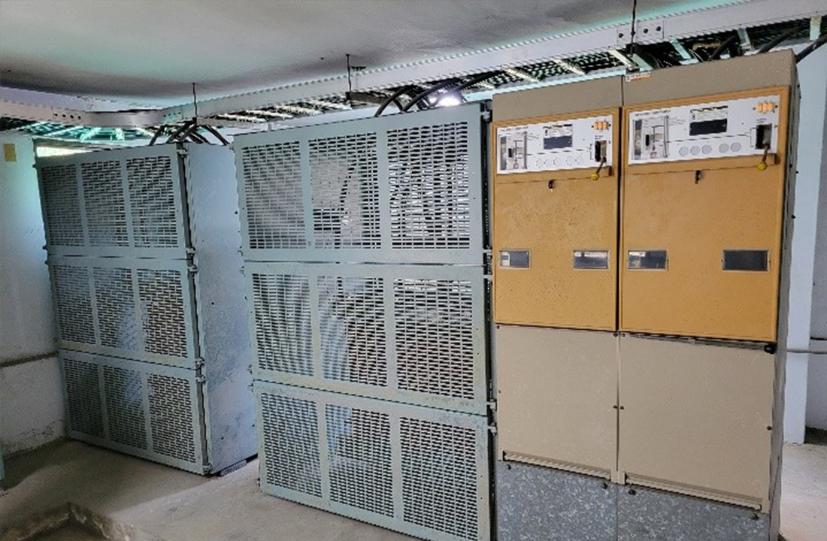
Taipei Rongmin General Hospital_Psychiatric Building, Helipad Center, and replacement of old electrical equipment at various power stations in the Parking Structure
Transformer Station Replacement Project
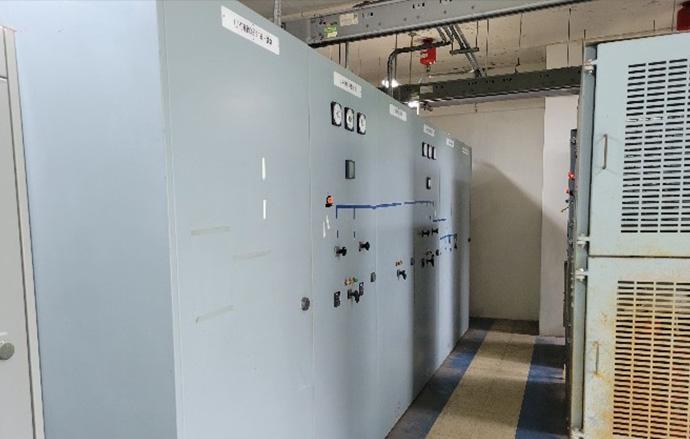

National Taiwan University Hospital_2022 East Street Substation Replacement Project
Transformer Replacement Project

